Seeing the potential
This extensive course was created EXCLUSIVELY for VP Box LIFETIME and YEARLY members.
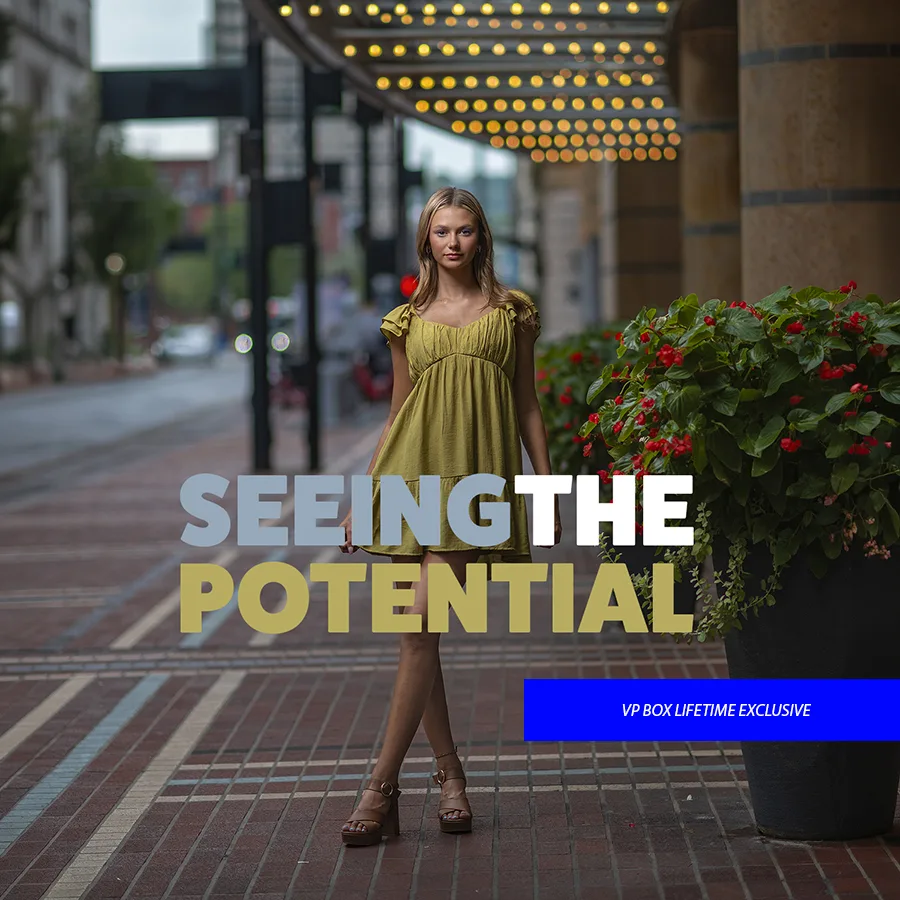
In Seeing the Potential, I take you behind the scenes to show how I turned a seemingly ordinary, uninspiring location into a portrait that looks like it was captured somewhere entirely different. I’ll walk you through what caught my attention, how I recognized the possibilities that weren’t immediately obvious, and how I used the existing light, camera placement, and composition to bring my vision to life. You’ll see the actual BTS footage, camera settings, original RAW file, and complete editing process from start to finish.
This extensive course was created EXCLUSIVELY for VP Box LIFETIME and YEARLY members.
Sometimes the difference between an ordinary location and an extraordinary photograph is simply recognizing what's already there.
In Seeing the Potential, I take you behind the scenes of a portrait session in a location that many photographers might walk right past.
What caught my attention wasn't the location itself, but the possibilities I saw within it. The overhead lights, the opening of light coming from camera left, and the way those elements could work together to create something visually compelling.
I'll walk you through what I saw, why I chose to photograph in that particular spot, and how I used the existing environment to create the final image.
Inside this course, you'll learn:
- How to recognize photographic potential in ordinary locations.
- How to identify existing light sources and understand what they can contribute to your image.
- How camera placement, composition, and exposure influence the final result.
- How to preserve the atmosphere of a location while bringing attention to your subject.
- How I take the original RAW file through the editing process to the finished photograph.
You'll see the actual behind-the-scenes footage, my camera settings, the original RAW file, and the complete editing process.
The goal of this course isn't to teach you how to find better locations. It's to help you recognize the possibilities in the locations you already have.
Because sometimes the photograph is there long before you ever raise your camera.