
THE ULTIMATE SHARP SHOOTING GUIDE
Sharpness Is a Decision.
Photographers have asked me for years how I consistently achieve sharp images at wide apertures, even when photographing large groups or subjects in motion.
The answer isn’t simply camera settings. It’s understanding where to focus, how distance influences sharpness, and how to anticipate what your subjects will do before pressing the shutter.
In this 122-page guide, I’m sharing 27 of my personal focusing techniques, demonstrated through real photographs, focus diagrams, actual camera settings, RAW files with EXIF data, and 100% unedited crops. Every technique is demonstrated through one or more real photographic examples.
One downloadable digital guide. 27 techniques. The decisions behind the sharpness.
Sharp Shooting Photography Guide – $79 | $29
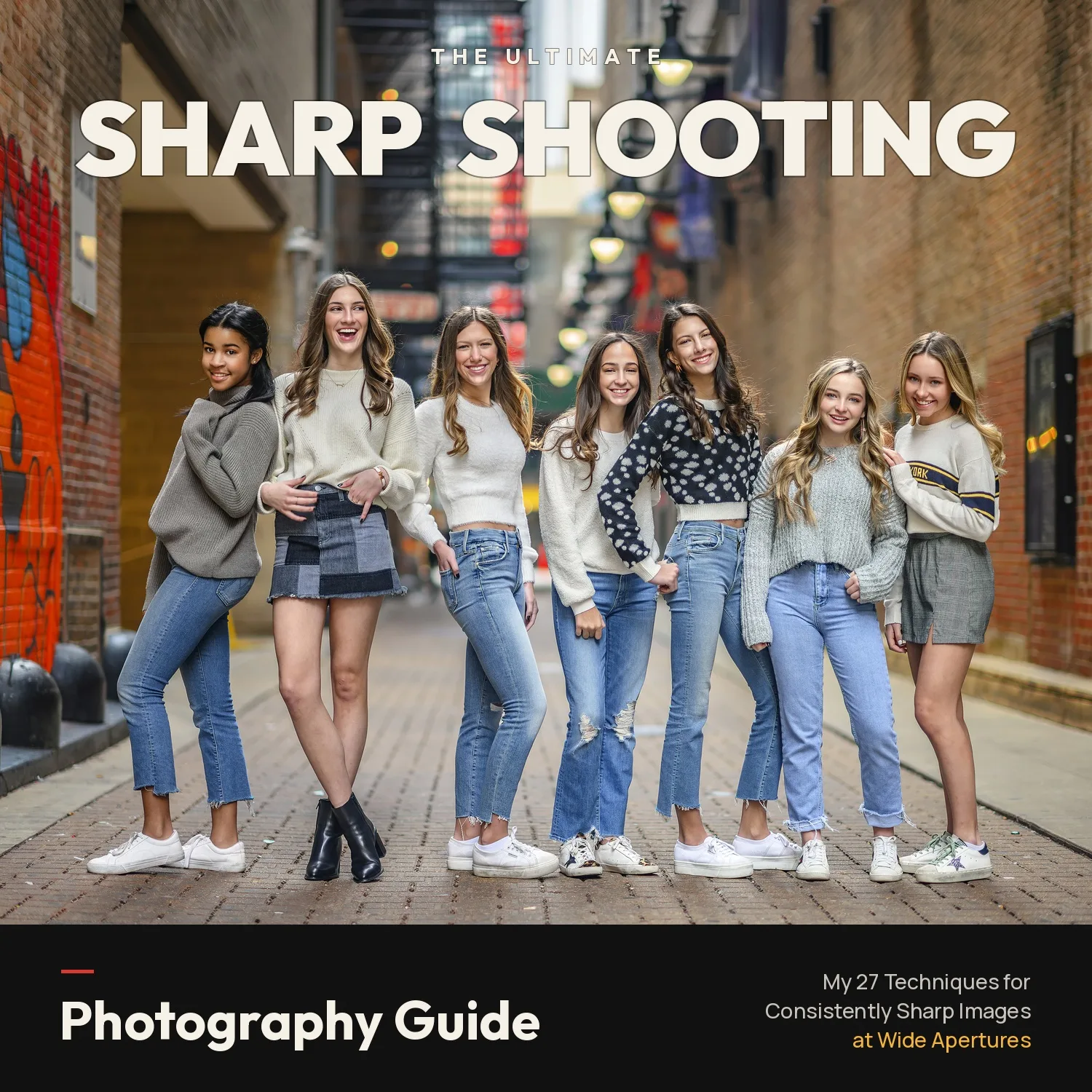
INSIDE THE Sharp shooting GUIDE
Real Photographs. Real Techniques. Real Results.
The Ultimate Sharp Shooting Photography Guide
122-Page Downloadable Digital Guide | 27 Techniques
Every technique in this guide comes from how I actually photograph my subjects. From individual portraits to large groups and unpredictable movement, I’m showing you the decisions I make to achieve consistently sharp images, even at extremely wide apertures.
You’ll see actual photographs, RAW files with EXIF data, detailed diagrams showing my focus placement, and 100% unedited crops so you can examine the results for yourself.
It’s Not Just Where I Focus.
Distance, depth of field, composition, and subject positioning all influence the decisions I make. I’ll show you how these elements work together, why I approach certain situations differently, and how I determine what needs to change to achieve sharpness.
Every Situation Requires a Decision.
From individual portraits and challenging facial features to large groups and unpredictable children, I’m sharing 27 techniques I personally use. Each one includes photographic examples demonstrating how I approach that particular situation.
How Sharp Is Sharp Enough?
I don’t just show you my finished photographs. I include RAW files with EXIF data, unedited 100% crops, and examples of images that didn’t work as intended. You’ll see what I consider acceptably sharp, what went wrong when an image wasn’t sharp, and what I changed to correct it.
.
Sneak peek on what’s inside the SHARP guide
You’ve Seen My Photographs. Now See What’s Behind Them.
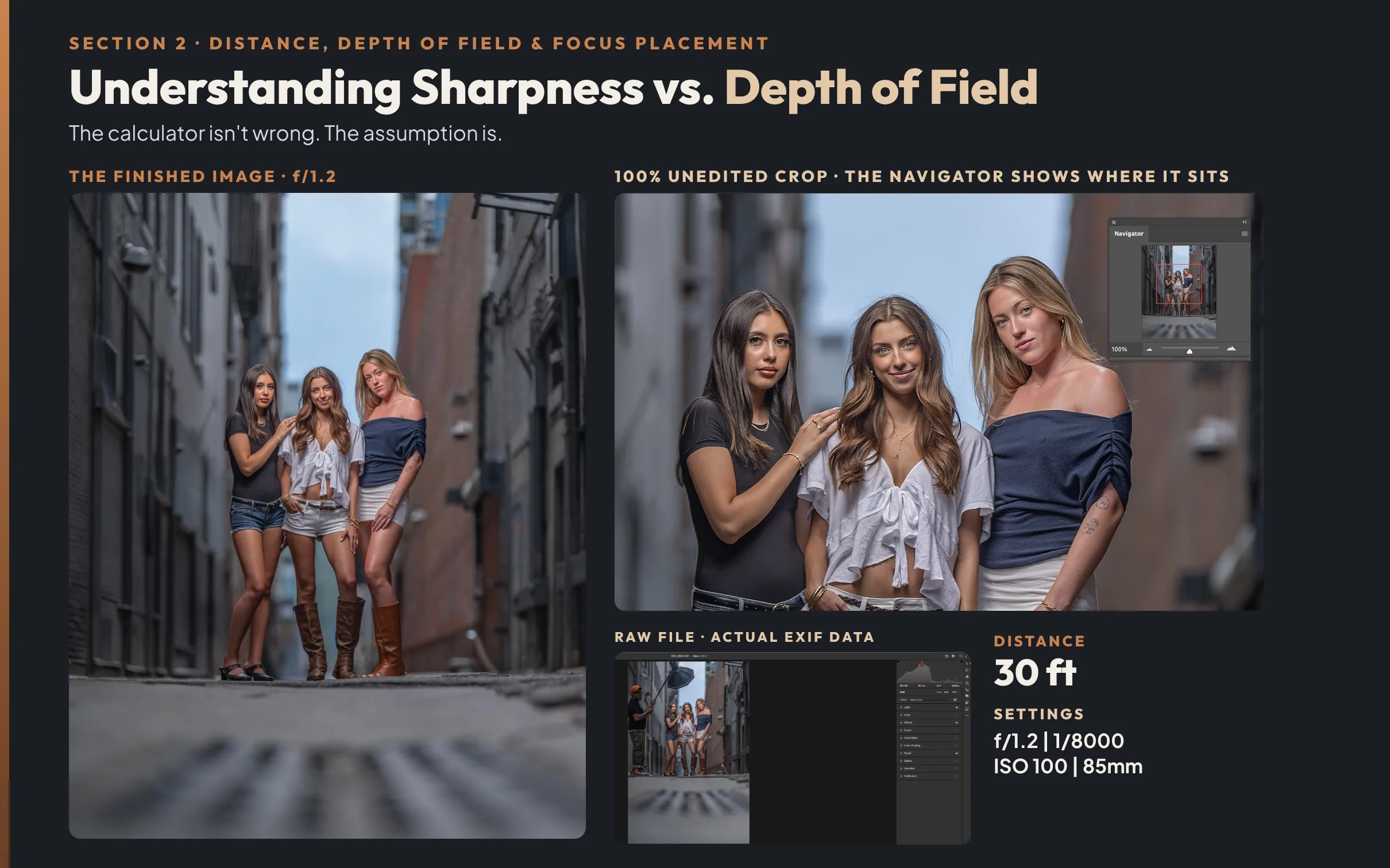
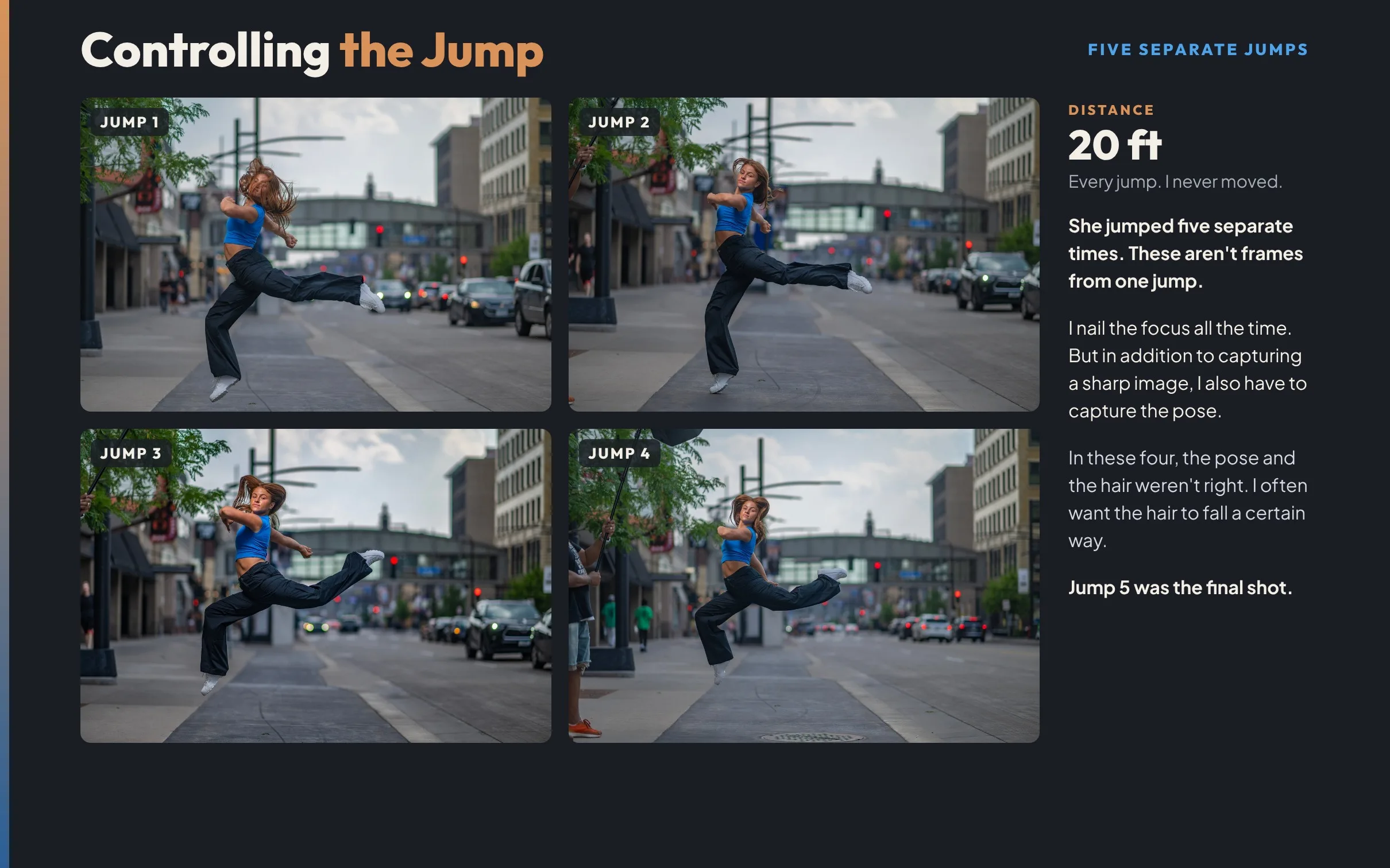
Photographers have questioned how I achieve the level of sharpness you see in my images, especially when I’m photographing groups at f/1.2 or capturing subjects in motion. They wonder if they were captured with a single frame, or even if they were composited.
In this guide, I’m opening up my actual shooting process. You’ll see how I approach different situations, the decisions I make, and the results those decisions produce.
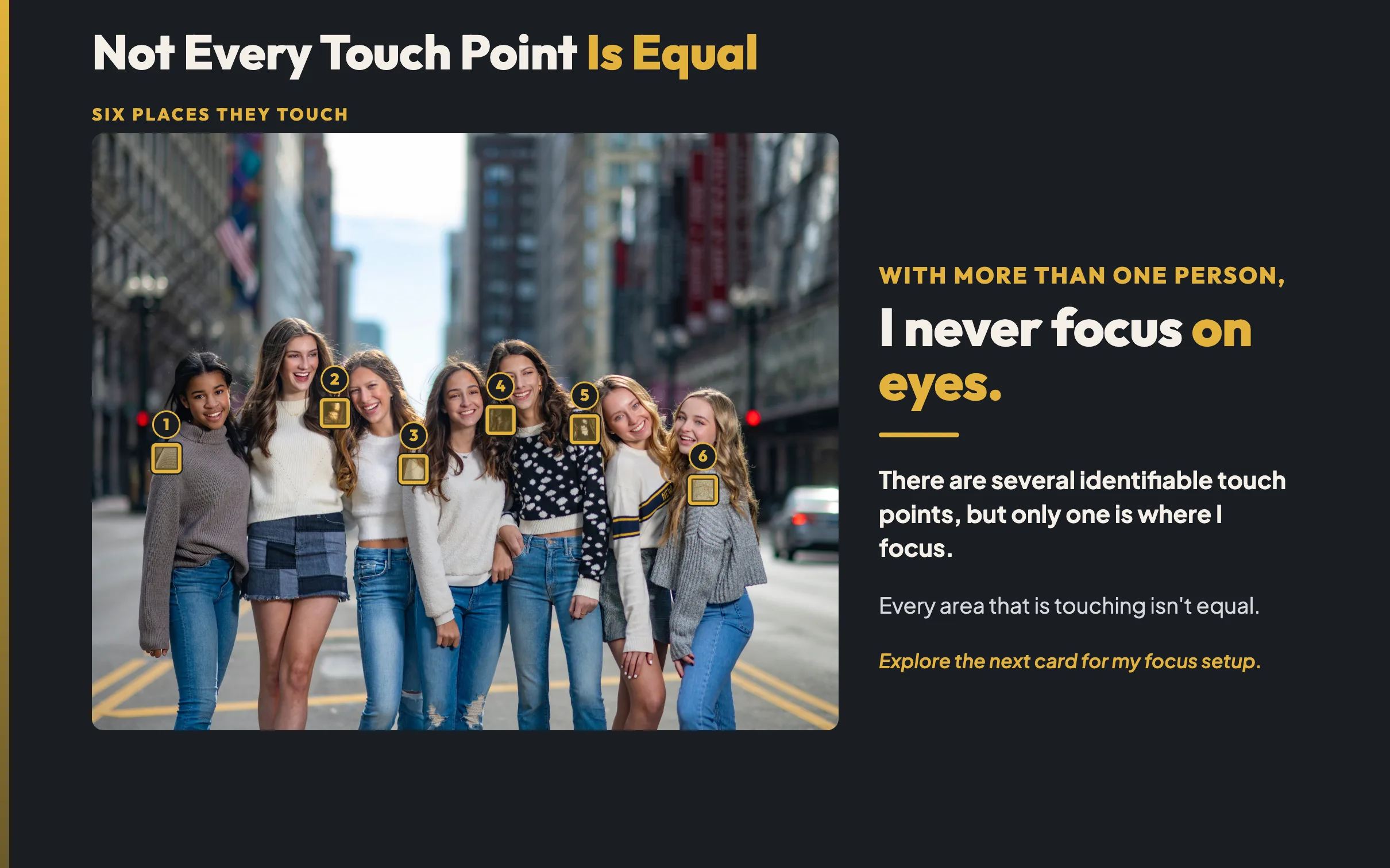
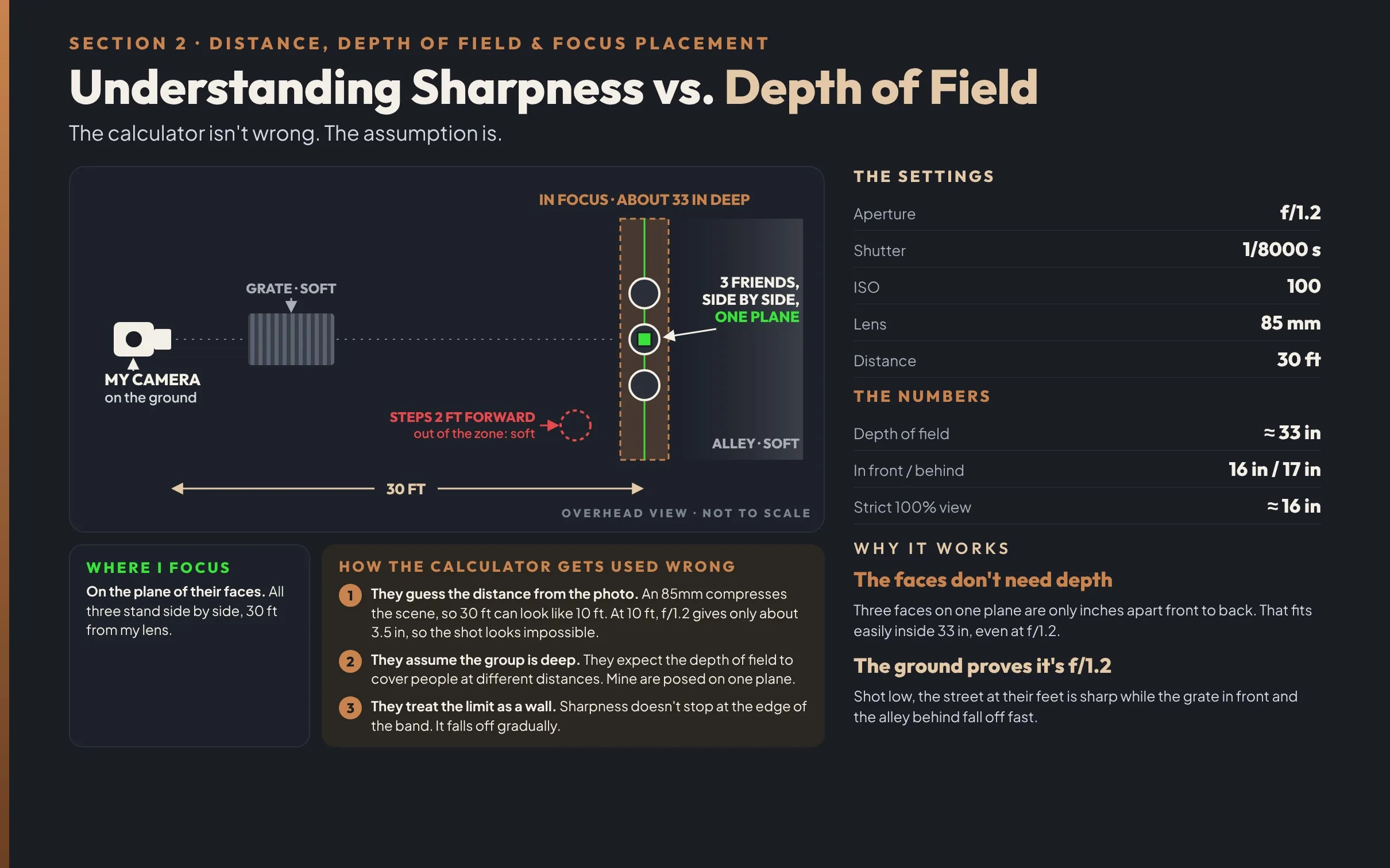
I’m not just showing finished photographs. I’m showing RAW files with EXIF data, detailed diagrams, and unedited crops so you can examine the sharpness for yourself. You will see exactly where I focus and, more importantly, why I made that decision.
Below is just a small preview of what’s inside the 122-page guide.
Who is this guide for?
Whether you’re learning how to achieve sharp images or you’ve been photographing professionally for years, this guide is designed to help you understand the decisions that influence sharpness, especially when working at wide apertures.
- Beginners who want to understand focus placement, depth of field, camera settings, and how to consistently achieve sharp photographs without feeling overwhelmed.
- Intermediate photographers who understand their equipment but struggle with inconsistent sharpness, photographing multiple subjects, or keeping moving subjects in focus. Learn how distance, positioning, and intentional decisions can improve your results.
- Experienced photographers who know their equipment and have attempted similar wide-aperture photographs but haven’t achieved the same results. You may have relied on depth-of-field calculations to determine what’s possible, but those calculations don’t account for every decision made during the photograph. I’m sharing the actual techniques I use, including approaches you may not have considered or tried.

Photography education for photographers who want to see more, decide faster, and make work that feels unmistakably theirs.